Last Updated on January 29, 2026 by The Daily Simmer Team
Salmon is one of those proteins that I rely on heavily because it works with almost any diet plan—whether you are doing Paleo, Keto, or just trying to eat more heart-healthy omega-3s. The problem is that people often overthink it. They bury it in complex sauces to hide the fish, or they cook it until it’s as dry as a hockey puck.
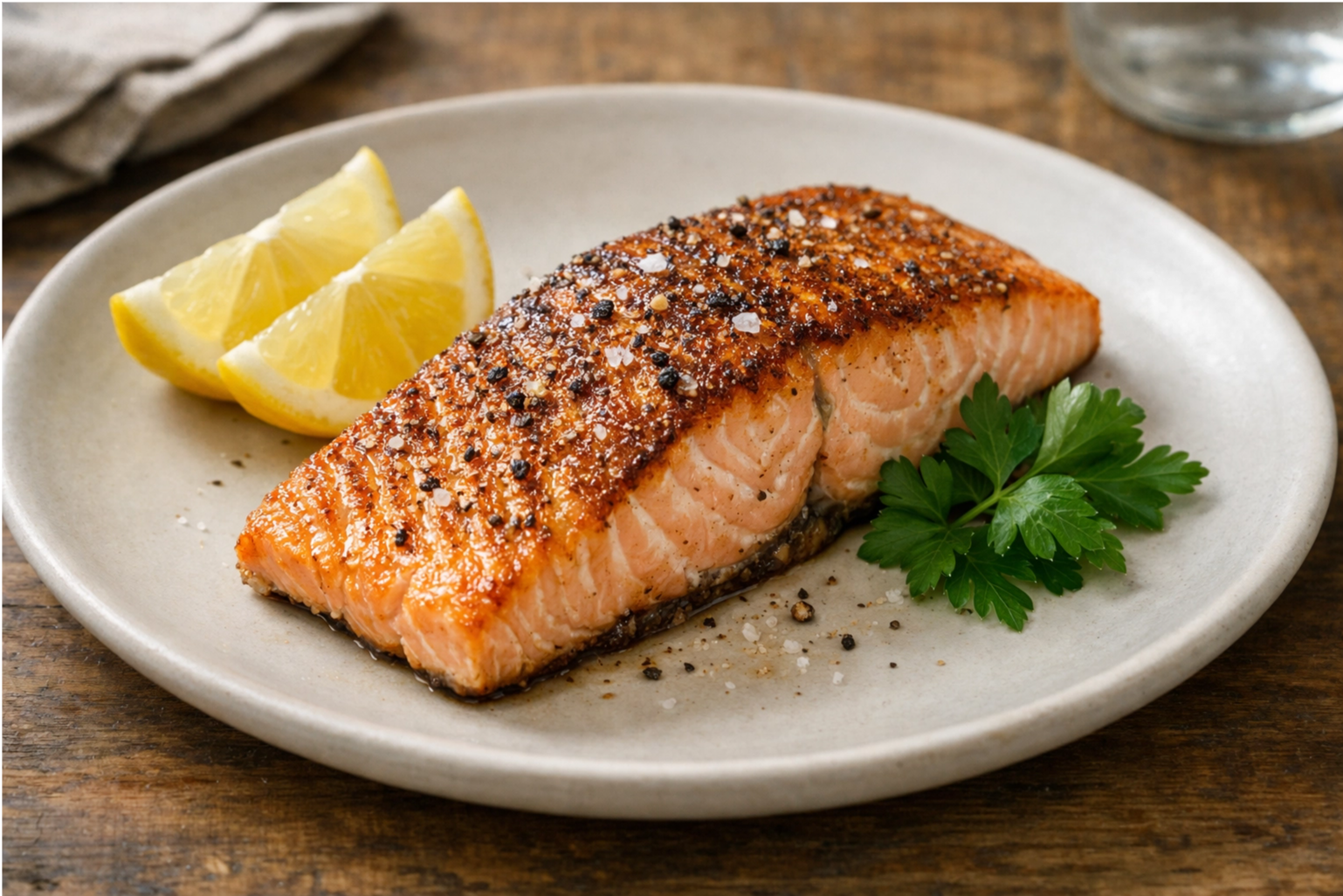
The recipe below is my “blank canvas” method. It’s a simple pan-sear that gives you a crisp exterior and a tender, flaky interior. Once you master this technique, you can top it with anything from a simple squeeze of lemon to a complex Thai curry sauce. I admit, I used to be terrified of the skin sticking to the pan, but I learned that if you just have patience and let it release on its own, it flips perfectly every time.
Contents
Ingredients
- 4 (6-ounce) salmon fillets (I prefer center-cut for even cooking)
- 1 tablespoon olive oil or avocado oil
- 1 teaspoon kosher salt
- 1/2 teaspoon freshly ground black pepper
- Lemon wedges, for serving
Instructions
- Temper the fish: Take your salmon out of the fridge about 15 minutes before you plan to cook. Cold fish hitting a hot pan seizes up and cooks unevenly.
- Dry it well: Use paper towels to pat the salmon dry. I mean really dry. If the surface is wet, it will steam instead of sear.
- Season: Sprinkle the salt and pepper generously over the flesh side.
- Sear: Heat the oil in a skillet over medium-high heat. When the oil is shimmering, add the fillets. If you have skin-on fish, place it skin-side down first. Press the top of the fillet gently with a spatula for a few seconds—this stops the skin from shrinking and curling the fish.
- Don’t touch it: Let it cook for about 4 to 5 minutes. Do not try to move it. When the skin is crisp, it will release from the pan naturally.
- Finish: Flip the fillets and cook for another 2 to 4 minutes on the other side. Use a meat thermometer to check for doneness (aim for 125°F-135°F for a moist center).
- Rest: Transfer to a plate and let it rest for 5 minutes before serving.
15+ Ways to Dress Up Your Salmon
Once you have your base salmon cooked (grilled, baked, or seared), try these flavor variations:
- Classic Grilled: Keep it simple with salt, pepper, and char marks. Great for salads.
- Creme Fraiche Bake: Roast it with white wine and lemon, then top with creme fraiche for a tangy finish.
- Salmon Cakes: Mash up leftovers with breadcrumbs and spices, then fry them crispy.
- Maple Crusted: A quick glaze of maple syrup adds a sweet crunch that cooks in under 10 minutes.
- Thai Chowder: Flake the cooked fish into a coconut milk broth with lemongrass and ginger.
- Mustard Dill: Poach the fish gently and serve with a classic creamy mustard sauce.
- Creamy Pasta: Toss chunks of salmon with bowtie pasta, asparagus, and a parmesan cream sauce.
- Orange Spiced: Use brown sugar, orange zest, and Chinese five-spice powder for a caramelized crust.
- Blackened: Coat heavily in Cajun spices and sear in a smoking hot cast-iron skillet.
- Sheet-Pan Mustard: Roast everything on one tray with a tangy mustard glaze.
- Superfood Salad: Flake warm salmon over kale, Brussels sprouts, broccoli, and quinoa.
- Stir-Fry: Cube the salmon and sear it quickly with kale, zucchini, and mushrooms.
- Basil Gremolata: Top a simple seared fillet with a mix of fresh basil, lemon zest, and garlic.
- Piccata Style: Serve with a buttery lemon sauce studded with salty capers.
- Mediterranean Bowls: Pair with couscous, tzatziki, and cucumbers.
- Chili Crisp: Drizzle with spicy chili crisp oil for a modern, savory kick.
Why You’ll Love This Recipe
- Versatility: This basic method works for meal prep, fancy dinners, or quick lunches.
- Health Benefits: Salmon is rich in healthy fats that keep you full without feeling heavy.
- Speed: You can go from fridge to plate in under 20 minutes.
Chef’s Tips for Perfection
- The Thermometer Rule: Overcooked salmon is dry and chalky. Use a meat thermometer. I usually pull mine off the heat around 125°F to 130°F because the temperature will rise another 5-10 degrees while it rests.
- Pan Choice: A well-seasoned cast-iron skillet is my favorite for getting a crust, but a heavy stainless steel pan works well too if you use enough oil.
- White Spots: If you see white stuff oozing out of the salmon (albumin), it usually means you are cooking it too fast or too long. Lower the heat slightly next time.
Storage and Reheating
Cooked salmon will keep in an airtight container in the fridge for up to 3 days. To reheat, I recommend doing it gently in a skillet over low heat or in the oven at 275°F. Microwaving tends to bring out a strong “fishy” smell and dries out the texture.
Nutritional Notes
A standard 6-ounce serving of salmon provides a substantial amount of protein and omega-3 fatty acids. It is naturally low in carbohydrates, making it suitable for low-carb and keto diets.