Last Updated on January 29, 2026 by The Daily Simmer Team
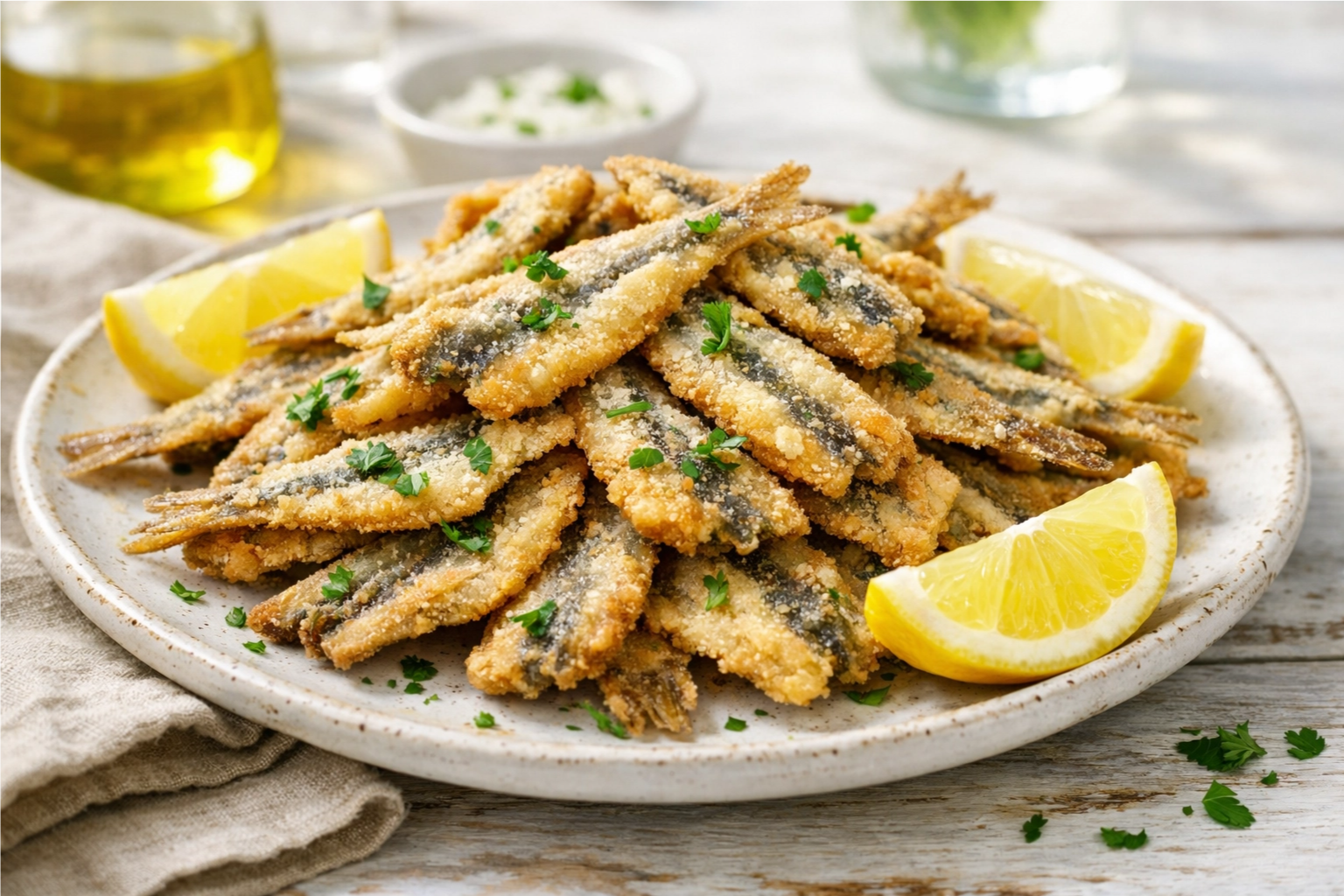
If you only know anchovies as the intensely salty, brown fillets from a tin that you pick off your pizza, fresh anchovies will be a complete surprise. They are mild, tender white fish with a delicate flavor similar to sardines but less “fishy.” In coastal Mediterranean kitchens, this is poor-man’s food that tastes like a luxury.
I learned the hard way that the most critical step here is drying the fish. The first time I made these, I was impatient and tossed damp fish into the flour. I ended up with a gummy, heavy batter that fell off in the pan, and the oil popped all over my stove. Now, I use a ridiculous amount of paper towels to make sure they are bone-dry before the lemon juice touches them. It makes all the difference in getting that thin, crisp shell.
Contents
Ingredients
- 2.2 lbs (1 kg) fresh anchovies (cleaned and butterflied)
- 4 tsp fresh lemon juice
- 1 tsp salt
- 1 tsp ground black pepper
- 2 cups all-purpose flour
- 2 cups vegetable oil (canola or sunflower work well)
Instructions
- Prep the Fish: Rinse your fillets gently. If you bought them whole, pinch the head off and pull the spine out; the fish should butterfly open naturally. Pat them very dry with paper towels.
- Season: Place the fish in a bowl and toss with the salt, pepper, and lemon juice. Don’t let them sit too long, or the acid will start to break down the delicate meat.
- Dredge: Put the flour in a wide, shallow bowl. Coat the fish in the flour one by one or in small handfuls. Shake them vigorously—you want a dusting, not a thick coat.
- Heat Oil: Pour the oil into a large skillet. You need enough depth so the fish floats, but it doesn’t need to be a deep fryer. Heat to medium-high.
- Fry: Lay the fish into the hot oil. Do not crowd the pan, or they will steam instead of crisp. Fry for about 2 to 3 minutes, flipping once if the oil is shallow, until they are golden.
- Drain: Transfer to a plate lined with paper towels to absorb excess grease.
Why You’ll Love This Recipe
- Mild Flavor: Fresh anchovies are not salt-bombs; they are subtle and savory.
- Fast Cooking: Because the fillets are so thin, they cook almost instantly.
- Economical: Fresh anchovies are often one of the cheapest fish available at the market.
Chef’s Tips for Perfection
- The Lemon Factor: Adding lemon juice before frying is unusual for some, but it helps cut the oiliness of the fish. However, if you prefer a super-crunchy crust, season with salt and pepper only, fry them, and squeeze the lemon on after cooking.
- Season the Flour: I usually add an extra pinch of salt and a little paprika to the flour itself for better color and flavor distribution.
- Oil Temperature: If the oil isn’t hot enough, the fish will soak it up and become greasy. Drop a pinch of flour in; if it sizzles immediately, you are ready to go.
Storage and Reheating
Fried fish is notoriously bad at being reheated. The crust loses its crunch and the fish dries out. These are best eaten immediately while hot. If you do have leftovers, I prefer eating them cold the next day with a squeeze of fresh lemon rather than trying to reheat them in the microwave.
Nutritional Notes
While fried food is higher in calories, anchovies are incredibly nutritious. They are rich in Omega-3 fatty acids and calcium (especially if you eat the tiny bones, which are soft enough to digest).
Easy & Crispy Fresh Anchovy Fillets – Healthy, Golden‑Fried Delight