Last Updated on January 29, 2026 by The Daily Simmer Team
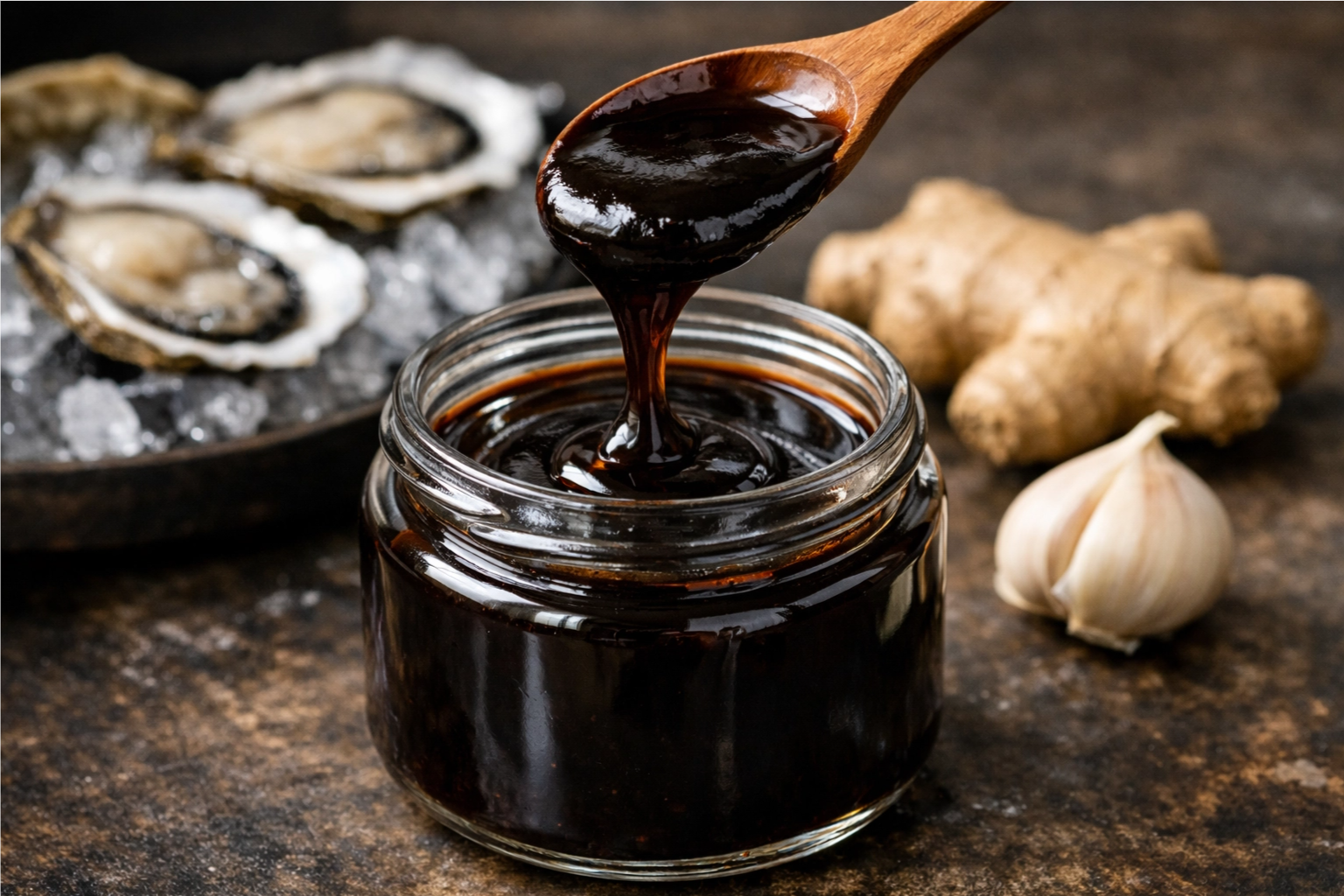
I’ll be honest: buying a bottle of oyster sauce at the grocery store costs a few dollars and takes zero effort. So, why on earth would you make it from scratch? The first time I tried this, it was purely out of curiosity, but the result surprised me. Commercial brands are often mostly cornstarch, caramel color, and MSG, with a tiny percentage of actual oyster extract. When you make it yourself, the depth of flavor is entirely different—it tastes like the ocean, savory and complex, without that artificial chemical aftertaste.
Fair warning: this process involves boiling oysters for a long time, so your kitchen is going to smell fairly pungent for an afternoon. It involves making a reduction (the oyster extract) and a caramel, then combining them. It takes patience, but having a jar of this in the fridge makes every stir-fry feel like a restaurant meal.
Contents
Ingredients
The Oyster Extract
- 1 lb (454g) shucked oysters (fresh or frozen/thawed)
- 1 cup water (for boiling) + extra for rinsing
- 1 tbsp salt
- 1 small onion, roughly chopped
- 2 cloves garlic, smashed
- 1 slice fresh ginger
The Sauce Base
- 10 tbsp granulated sugar (approx. ½ cup + 2 tbsp)
- 2 cups water
- 2 tbsp salt (adjust based on preference)
- 2 ½ tbsp dark soy sauce (mainly for color)
- Thickener: 1 ½ tbsp cornstarch mixed with 3 tbsp water
Instructions
- Boil the Base: In a pot, combine the oysters, their juices, 1 cup of water, and the first tablespoon of salt. Boil for about 5 minutes.
- Blend: Dump the hot oysters and liquid into a blender. Add the onion, garlic, and ginger. Blitz it until it’s a smooth, grey soup.
- Strain: This is the messy part. Pour the mixture through a sieve lined with a cheesecloth or a clean flour sack towel. Squeeze it tight. You want the liquid, not the gritty solids. If you have extra water mentioned in the ingredients, pour it through the cloth to wash out any remaining flavor.
- Reduce: Pour that cloudy liquid back into a pot. Simmer it on low. You need to be patient here—let it cook down for 1 to 1.5 hours. You are looking to end up with a small amount (about 1/3 cup) of dark, intense oyster concentrate.
- Caramelize: In a clean saucepan, melt the sugar over medium-low heat. Watch it like a hawk. When it turns a deep amber brown (like an old penny), carefully add the 2 cups of water. Stand back—it will hiss and splatter. Whisk until the sugar dissolves into the water.
- Combine: Pour your oyster concentrate into the sugar water. Add the soy sauce and the remaining salt.
- Thicken: Bring it to a bubble. Stir in the cornstarch slurry. It should glossy up and thicken immediately. Turn off the heat.
Why You’ll Love This Recipe
- Purity: You know exactly what is in it. No preservatives or hidden thickeners.
- Control: You can adjust the sweetness or saltiness. I usually hold back a little on the salt until the end to taste.
- Usage: It keeps for weeks in the fridge and works perfectly in broccoli beef, marinades, or just drizzled over steamed bok choy.
Chef’s Tips for Perfection
- The “Splatter” Zone: When you add water to hot caramelized sugar, it creates a violent reaction. Use a pot with high sides and maybe wear an oven mitt to protect your hand from the steam.
- Filtering: Do not skip the cheesecloth. A metal mesh strainer alone isn’t fine enough; you will end up with gritty sauce if you don’t use cloth.
- Dark Soy Sauce: Make sure you use “Dark” soy sauce, not regular or light. Dark soy sauce is thicker and less salty, but it provides that signature deep brown, almost black color we expect from oyster sauce.
Storage and Reheating
Store the sauce in a sterilized glass jar in the refrigerator. It stays good for about 3 to 4 weeks. If it gets too thick in the fridge, you can just spoon it out—it will melt down the second it hits a hot wok.
Nutritional Notes
One tablespoon is roughly 45–60 calories, mostly from the sugar. While it has some protein from the oysters, it is primarily a condiment used for flavor, so the sodium content is the main thing to watch (though it is generally lower sodium than straight soy sauce).