Last Updated on January 29, 2026 by The Daily Simmer Team
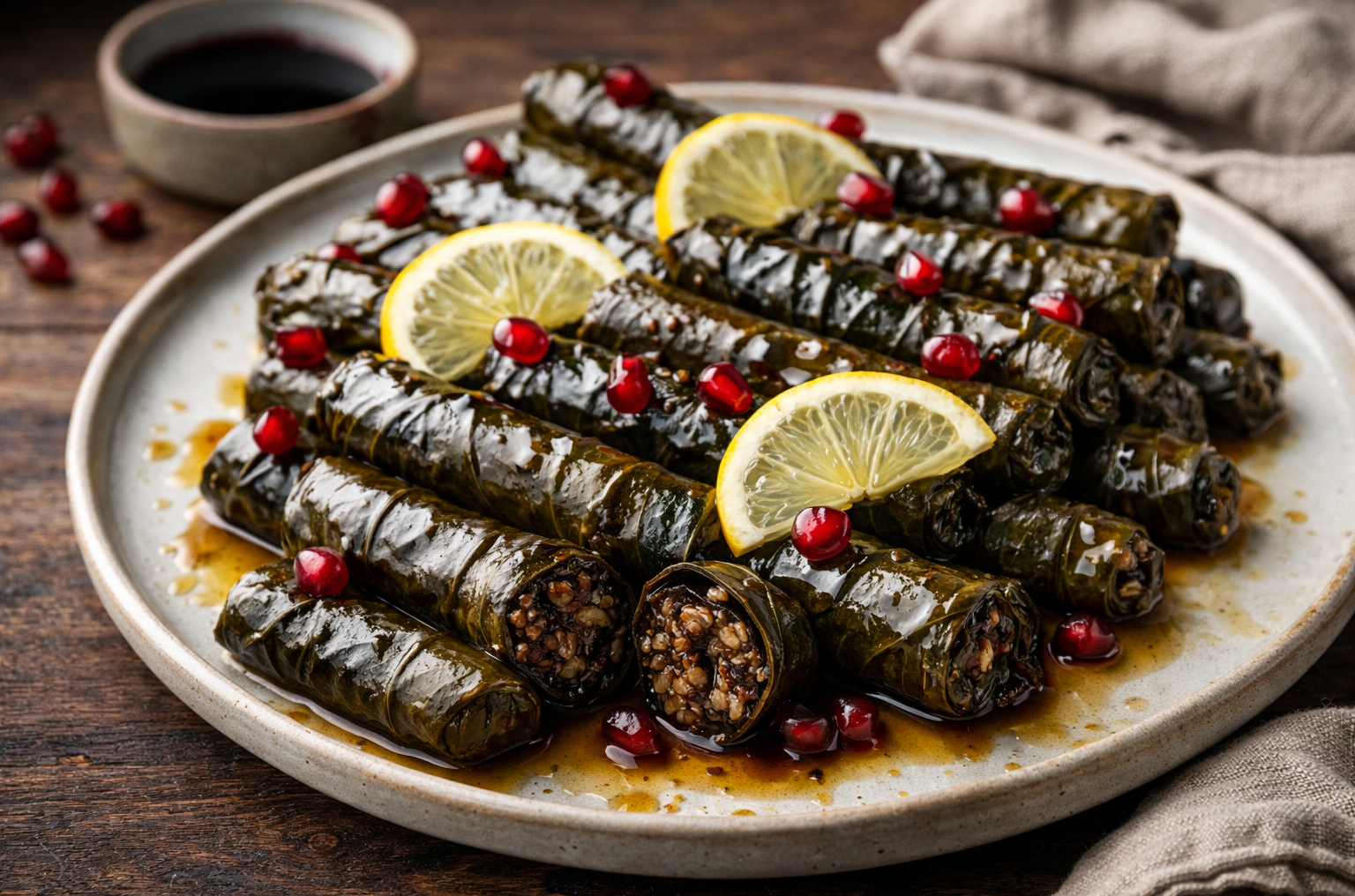
Aleppo-Style Yalanji (Stuffed Grape Leaves)
Sour, sweet, and incredibly rich—featuring a secret ingredient from the kitchens of Aleppo.
There are few things in the culinary world that test your patience quite like rolling grape leaves, known in the Levant as Yalanji. But there is a reason we stand at the counter for two hours doing it: the result is simply unmatched.
I’ve tried dozens of variations of this dish. Some are purely lemony, some are very sweet. But this specific recipe, which follows the Aleppo style (Halabi), balances everything perfectly. It’s heavy on the olive oil—don’t be shy with it—and uses pomegranate molasses for that signature dark, tangy depth.
What really surprised me when I first got this recipe was one peculiar ingredient in the filling: Turkish Coffee. It sounded bizarre to me at first. Coffee in rice? But trust me, you don’t taste “coffee” in the final dish. It adds an earthy bitterness that cuts through the acidity of the lemon and the sweetness of the molasses. It brings the whole flavor profile together in a way that makes people ask, “What is that special flavor?”
This is a labor of love. I usually put on a podcast, clear the kitchen table, and treat the rolling process as a bit of meditation.
Contents
Key Ingredient Notes
The magic of Yalanji lies in the balance of sour, sweet, and savory. Here is what you need to get right:
1. The “Trinity” of Pastes
You need three distinct thickeners for the sauce: Tomato Paste for body, Red Pepper Paste (Dibis Fleifle) for a mild heat and depth, and Pomegranate Molasses for that iconic sour stickiness. These three create the rich, dark ruby color of the filling.
2. The Secret Weapon: Coffee
This recipe calls for 1/2 teaspoon of Turkish Coffee. Do not skip it! It acts similarly to how chocolate works in a Mexican Mole sauce—it provides an earthy base note that prevents the dish from just tasting like “sour rice.”
3. The Rice
Interestingly, this specific recipe calls for Basmati Rice. While short-grain is common, Basmati here provides a lighter, fluffier texture that absorbs the oil beautifully without becoming mushy.
How to Make It: Step-by-Step
Step 1: Prep Work
Start by soaking your grape leaves in hot water with salt and cumin to soften them. Meanwhile, wash the Basmati rice well and let it soak in cool salted water for 20 minutes. This ensures the grains cook evenly.
Step 2: The Par-Cooked Filling
In a pot, sauté the onions in the full cup of olive oil until wilted. Add the rice and stir for 3 minutes. Then, add the “Trinity” (tomato paste, pepper paste, molasses). finally, stir in the spices, lemon juice, and the coffee. Turn off the heat and mix in the fresh parsley. Let it cool.
Step 3: Rolling & Stacking
Line the bottom of your pot with tomato slices to prevent burning. Roll each leaf into a tight cigar shape and arrange them in concentric circles in the pot.
Step 4: The Simmer
Place a heavy weight (like a ceramic plate) on top of the leaves to keep them from floating. Mix the cooking sauce (lemon, oil, molasses, salt), pour it over, and add water until covered by about 1/2 inch. Simmer on low for 1.5 hours.
Why You’ll Love This Recipe
- Texture: Because we par-cook the filling with plenty of oil, the inside is meltingly soft, not chalky or hard.
- Flavor Depth: The combination of coffee and pomegranate gives it a savory sweetness that is addictive.
- Great for Meal Prep: Yalanji actually tastes better the next day after the flavors have marinated in the fridge.
Serving and Storage
Cooling is Critical: Once cooked, do not remove the leaves from the pot while they are hot. If they hit the air while hot, they will oxidize and turn a dark, unappealing color. Let them cool completely in their liquid.
- Serve: Cold or at room temperature, garnished with fresh pomegranate seeds and lemon wedges.
- Store: In an airtight container in the fridge for up to 5 days. Drizzle with a little extra olive oil to keep them moist.
Troubleshooting
- Rice too hard? You likely didn’t soak the rice long enough or didn’t add enough water to the pot. Add a bit more hot water and cook for another 15 mins.
- Leaves too tough? If using fresh leaves, ensure you boil them longer in the prep stage. If jarred, ensure you rinsed off the brine well.