Last Updated on January 29, 2026 by The Daily Simmer Team
Coconut Crab Soup: 7 Secrets to a Creamy Thai Bisque
Warm up with this rich fusion of lemongrass, peanut butter, and fresh seafood.
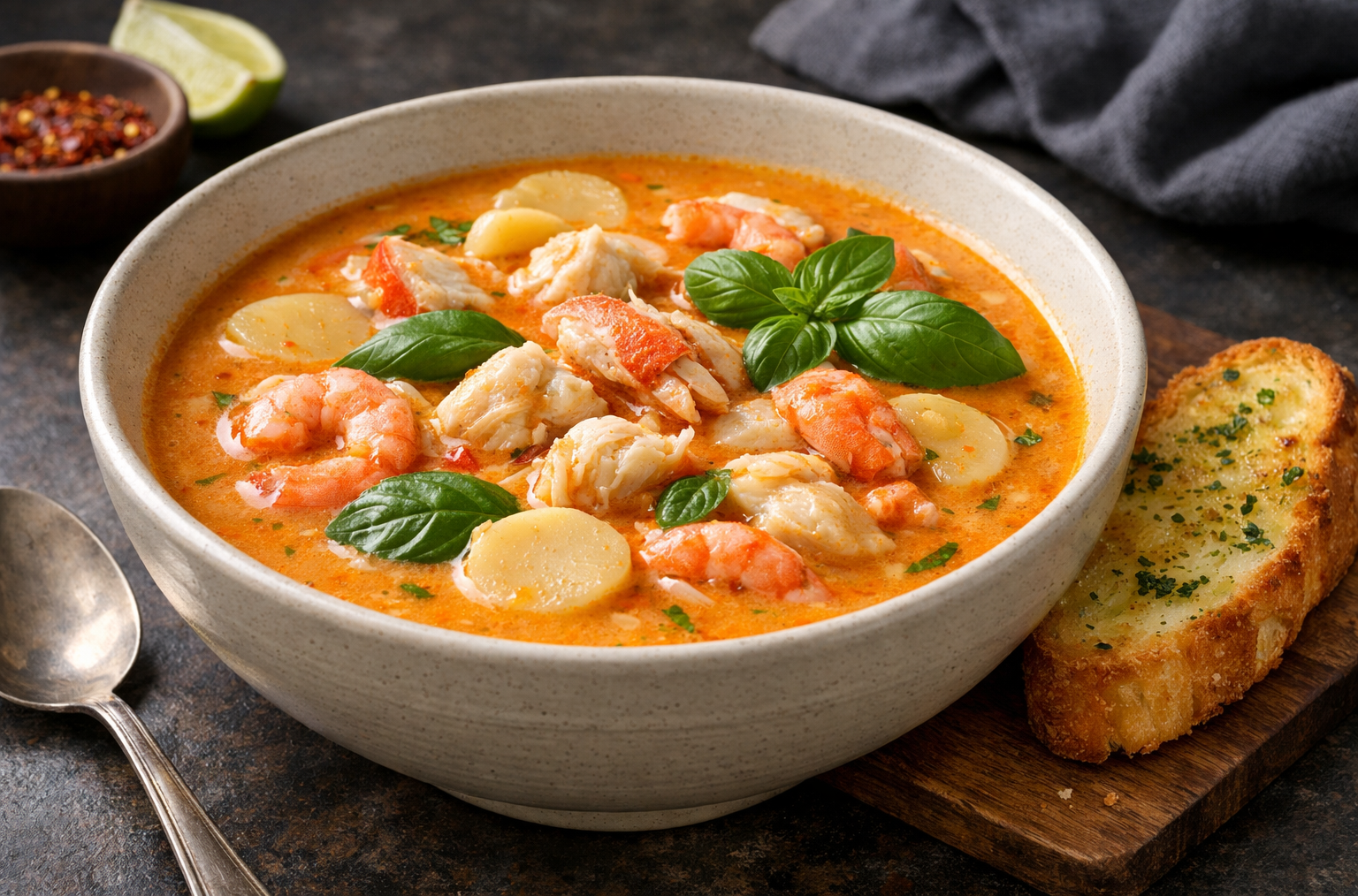
If you are looking for the ultimate comfort food that feels upscale but is surprisingly easy to make, this Coconut Crab Soup is the answer. There is something magical about the combination of sweet shellfish and rich, creamy coconut milk that transports you straight to a beachside restaurant in Thailand.
Many home cooks are intimidated by making bisque or seafood chowders, fearing they need hours to make a stock. However, this Coconut Crab Soup utilizes a clever shortcut: fortifying store-bought chicken broth with powerful aromatics like lemongrass and chili. It creates a depth of flavor in just 40 minutes that tastes like it has been simmering all day.
Whether you are hosting a dinner party or just need a warming bowl for a quiet night in, this recipe delivers on all fronts: texture, spice, and umami.
Contents
Why This Coconut Crab Soup Recipe Works
The success of this dish lies in the balance. Traditional bisques use heavy cream, which can mask the delicate flavor of the crab. In this Coconut Crab Soup, we use full-fat coconut milk. The plant-based fat carries the spice from the chili peppers more effectively than dairy, coating your palate with every spoonful.
Furthermore, we include a secret ingredient: Chunky Peanut Butter. While this might remind you of a Satay sauce, in this soup, it acts as a thickener and adds a savory, roasted undertone that compliments the sweetness of the crab legs perfectly. It bridges the gap between the spicy broth and the sweet coconut.
Key Ingredients Breakdown
1. The Aromatics: Lemongrass & Chili
You cannot make an authentic-tasting Thai soup without Lemongrass (Cymbopogon). This fibrous stalk adds a complex citrus scent without the sourness of lemon juice. We bruise the stalks to release the essential oils into the broth. Combined with fresh chili, it creates the aromatic base.
2. The Seafood: Crab & Shrimp
For the best Coconut Crab Soup, try to use King Crab or Snow Crab legs. The meat is sweeter and comes out in larger chunks compared to canned crab meat. We also add shrimp for varied texture.
3. The Crunch: Water Chestnuts
Texture is often overlooked in soups. Sliced water chestnuts provide a crisp, refreshing crunch that contrasts beautifully with the soft seafood and creamy liquid.
How to Make Coconut Crab Soup Step-by-Step
Step 1: Infuse the Broth
Begin by pouring your chicken broth into a large pot. Take your lemongrass stalks, trim the tops, and use the back of your knife to smash the bulbous ends. This “bruising” technique is essential to release flavor. Add the lemongrass and sliced chili to the broth and boil for 15 minutes.
Step 2: Create the Creamy Base
Lower the heat to a simmer. Add the coconut milk, chunky peanut butter, Sambal Oelek (chili paste), and fish sauce. Whisk vigorously. You want the peanut butter to fully dissolve so the soup becomes uniform and velvety.
Step 3: Add the Protein
Add the crab meat, raw peeled shrimp, and water chestnuts. Simmer gently for about 5 minutes. Watch the shrimp closely; as soon as they turn opaque and pink, the soup is done. Overcooking will make the seafood rubbery.
Serving Your Coconut Crab Soup
Presentation matters. Ladle the hot soup into wide bowls. Garnish generously with fresh basil leaves; the herbal note cuts through the richness.
For a complete meal, serve this with Garlic Butter Toast (Internal Link Placeholder) to dip into the broth. The crunchy bread absorbs the spicy coconut flavors beautifully.
Storage and Reheating
If you have leftovers of this Coconut Crab Soup, store them in an airtight container in the refrigerator for up to two days. When reheating, do so gently on the stovetop over low heat. Do not let it come to a rolling boil, or the coconut milk may separate or “curdle.”
Health Benefits
Aside from being delicious, this soup offers nutritional value. Crab and shrimp are excellent sources of lean protein and Omega-3 fatty acids. Additionally, ginger and chili peppers are known for their anti-inflammatory properties and ability to boost metabolism.
Ready to try more exotic flavors? Check out our full archive of Seafood Recipes for more inspiration.