Last Updated on January 29, 2026 by The Daily Simmer Team
I stumbled across this recipe years ago while looking for a way to use up some sushi-grade tuna I had bought on impulse. The story goes that this specific method comes from a general manager at Ruth’s Chris Steak House who worked his way up from being a dishwasher. I love recipes with that kind of history; they usually rely on technique rather than fancy equipment.
The first time I made this, I made the mistake of looking away from the pan for a moment and ended up with fully cooked tuna—which is dry and disappointing. The sear happens incredibly fast, literally seconds per side. The real surprise here, though, is the sauce. It sounds strange to mix dry mustard, soy sauce, and cheap beer, but the result is a sharp, salty dip that cuts right through the heavy spices on the fish. A warning: this sauce recipe makes a large batch (about 2 cups), far more than you need for one dinner, but it keeps well in the fridge.
Contents
Ingredients
For the Tuna
- 4 (4-ounce) Ahi tuna steaks (ensure they are sushi-grade)
- 2 tablespoons blackening seasoning
- 1 tablespoon canola oil (or any high-heat oil)
- Garnishes: Pickled ginger, fresh cilantro sprigs, lemon wedges
- Optional: Cucumber salad for serving
For the Mustard Sauce
- 1/2 cup Coleman’s dry mustard
- 1/4 cup Dijon mustard
- 1 cup soy sauce
- 6 ounces beer (a standard lager like Budweiser works best)
Instructions
- Make the sauce base: In a medium bowl, whisk together the dry mustard and Dijon mustard. It will be thick and pasty. You want to get the lumps out now because they are hard to fix later.
- Add liquids: Slowly drizzle in the soy sauce while whisking. Once smooth, pour in the beer. Do this slowly—the carbonation in the beer will react with the mustard and foam up quite a bit. Whisk until consistent and set aside.
- Prep the fish: Pour your blackening seasoning into a pie tin or a flat plate. Pat the tuna steaks dry with a paper towel, then press them firmly into the spices, coating every side, including the edges.
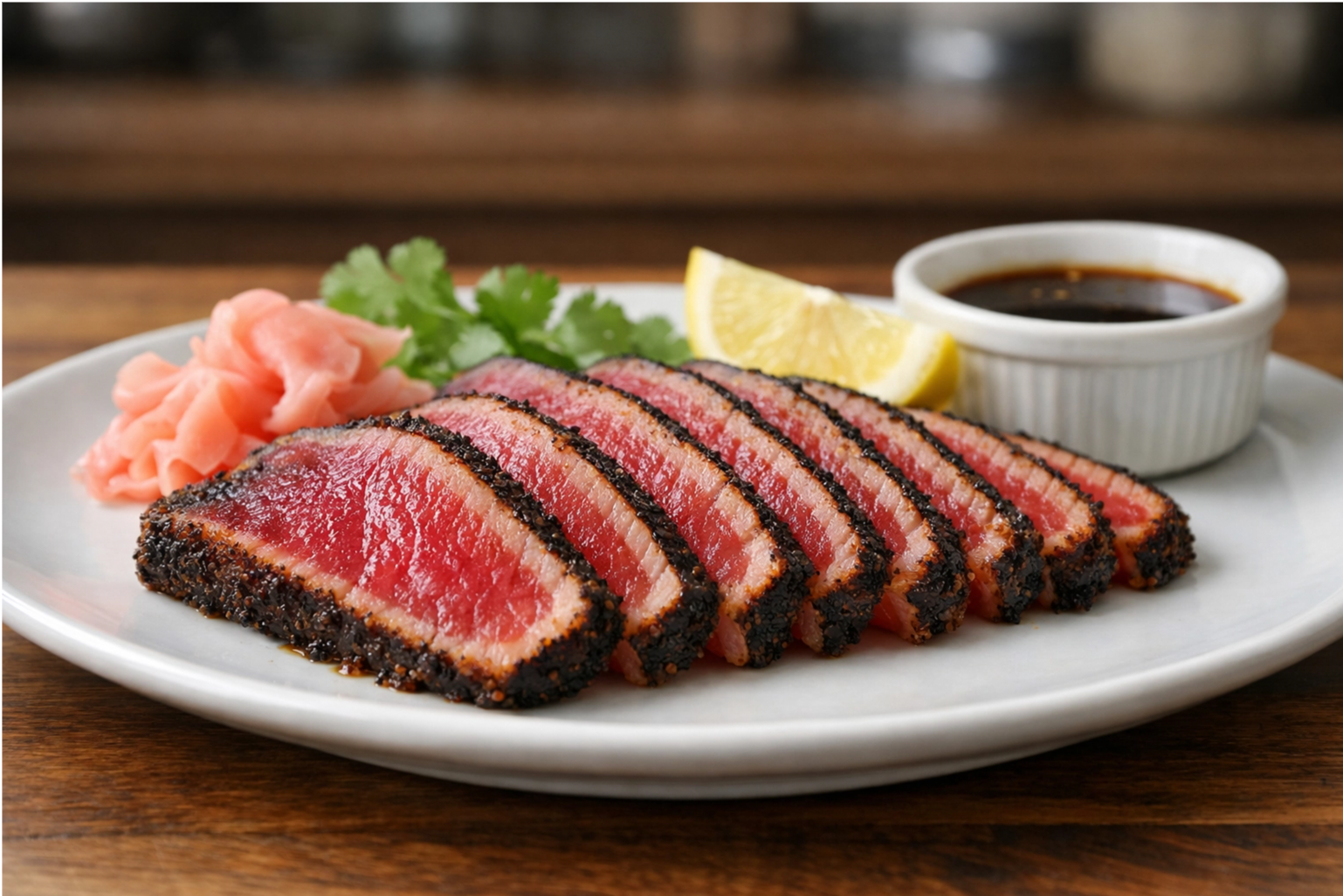
- Sear the tuna: Get a cast iron skillet ripping hot. Add the canola oil. Carefully lay the tuna in the pan. Sear for 5 to 10 seconds per side. Count it out loud if you have to; you only want a thin gray ring on the outside with a cool red center.
- Slice and serve: Move the tuna to a cutting board. Using your sharpest knife, slice the steaks into thin strips. Arrange them on a plate, overlapping slightly (shingled). Top with pickled ginger and cilantro, and serve with a ramekin of the mustard sauce on the side.
Why You’ll Love This Recipe
- It is incredibly fast. Once the sauce is mixed, the actual cooking takes less than two minutes.
- The sauce is a unique flavor bomb—salty, spicy, and tangy—that you won’t find in standard cookbooks.
- It looks impressive on a plate but requires zero advanced cooking skills, just a hot pan.
Chef’s Tips for Perfection
- Ventilation is key: Blackening seasoning burns slightly when it hits hot oil. Turn your range hood fan to high or open a window before you start searing, or your smoke alarm will definitely go off.
- The Knife Matters: Seared tuna has a cooked crust and a raw center. If you use a dull knife, you will squash the meat rather than slicing it. Use a freshly honed blade and let the knife do the work.
- Beer Choice: Don’t use a heavy stout or a bitter IPA for the sauce. A plain American lager gives the right consistency without overpowering the mustard.
Storage and Reheating
This is one of those dishes you really should eat fresh. Seared tuna does not reheat well; if you microwave it, it will cook through and smell strong. If you have leftovers, eat them cold the next day over a salad. The mustard sauce, however, is a different story. It will keep in a sealed jar in the refrigerator for several weeks. I use the leftover sauce as a marinade for chicken or a dip for pretzels.
Nutritional Notes
Tuna is very lean and high in protein. The calories in this dish mostly come from the oil used for searing and the sauce. The mustard sauce is quite high in sodium due to the soy sauce, so dip sparingly if you are watching your salt intake.