Last Updated on January 29, 2026 by The Daily Simmer Team
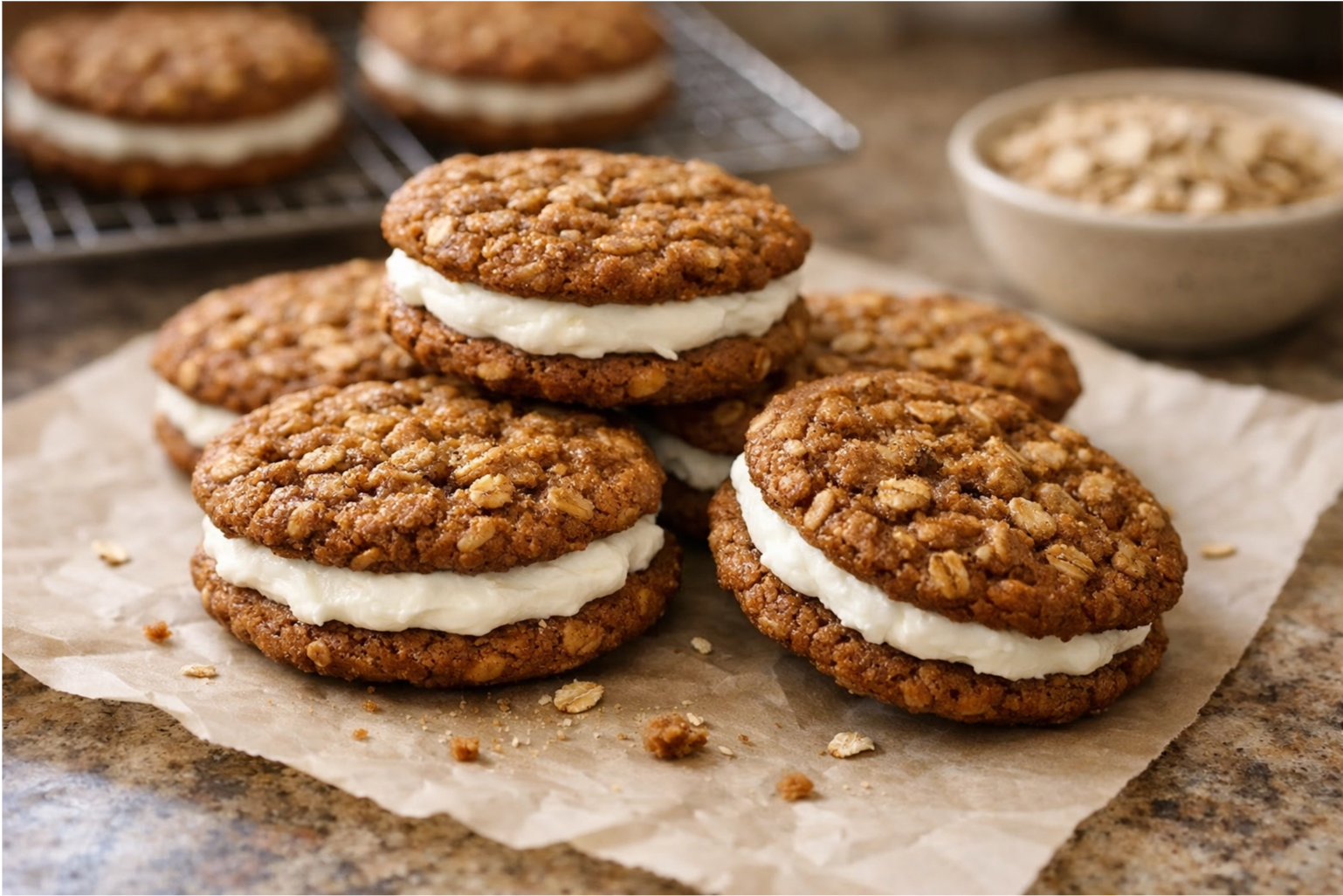
There is something specifically nostalgic about peeling back the plastic wrapper of an oatmeal creme pie. It was always the highlight of a school lunch. I started making these at home because I wanted that same chewy texture but without the preservative aftertaste. The key here really is the molasses; it gives the cookie that deep, dark sweetness and keeps the crumb soft, which is essential because you don’t want the cookie to snap when you bite into the sandwich.
I’ll admit, the first time I made these, I was impatient. I piped the filling onto the cookies while they were still slightly warm. The filling immediately melted into a sugary puddle and slid right off the edges. Learn from my mess: let the cookies cool completely. It takes patience, but it’s the only way to get that perfect, thick layer of creme that stays put.
Contents
Ingredients
The Oatmeal Cookies
- 3/4 cup salted butter, softened
- 1 cup brown sugar, packed
- 1/4 cup granulated sugar
- 3 tablespoons molasses
- 1 teaspoon vanilla extract
- 1 egg + 1 egg yolk
- 3/4 teaspoon baking soda
- 1 teaspoon salt
- 1 1/2 cups all-purpose flour
- 1 cup old fashioned oats (steel cut works for crunch, but rolled is classic)
The Creme Filling
- 1/2 cup salted butter, softened
- 1/2 cup shortening (Crisco)
- 3 1/2 cups powdered sugar
- 1 teaspoon vanilla extract
Instructions
- Prep the oven: Preheat your oven to 350°F. Line two large cookie sheets with parchment paper. Do not skip the parchment; these are sticky.
- Make the dough: In a stand mixer or with a hand mixer, cream the butter, brown sugar, white sugar, molasses, vanilla, egg, and extra yolk. Beat this well until it looks pale and fluffy.
- Add dry ingredients: Mix in the baking soda, salt, and flour just until a soft dough forms. Stir in the oats last so they are evenly distributed.
- Bake and flatten: Use a 1/4 cup scoop to drop the dough onto the trays. They spread, so give them room (about 8 per pan). Bake for 14 minutes. Pull the pan out, gently press the tops of the cookies down with a spatula to flatten them, then put them back in the oven for 2-3 more minutes. The edges should be browned.
- Cool: Let them cool on the pan for 5 minutes, then move to a wire rack. They must be room temperature before filling.
- Make the filling: Beat the butter and shortening together until very fluffy. Slowly add the powdered sugar and vanilla. If it’s too stiff, add a teaspoon of milk; if it’s too loose, add more sugar.
- Assemble: Pipe or spoon a generous amount of filling onto the bottom of one cookie and press another cookie on top.
Why You’ll Love This Recipe
- Texture: The “bake, press, bake” method creates a dense, chewy cookie that mimics the store-bought version perfectly without being dry.
- The Filling: Using a mix of butter and shortening creates a filling that is stable and fluffy, exactly like the classic creme center.
- Versatility: You can use steel-cut oats for a hearty crunch or quick oats for a softer, more uniform chew.
Chef’s Tips for Perfection
- The Molasses Matter: Do not swap molasses for honey or maple syrup. The acidity in molasses reacts with the baking soda to create the specific rise and chewiness these cookies need.
- Don’t Overbake: These will look slightly underdone in the center when you pull them out. That is fine. They will firm up as they cool. If you bake them until they are hard, the sandwich will be difficult to eat.
- Shortening is Necessary: I know some people prefer all-butter fillings, but the shortening is what gives the creme that specific “cloud-like” texture and prevents it from melting too easily at room temperature.
Storage and Reheating
Store these in an airtight container at room temperature. Because of the high sugar content and the shortening in the filling, they are shelf-stable for about 3 to 4 days. In fact, they are often better on day two as the cookies soften slightly from the moisture in the filling. If you want to keep them longer, freeze the assembled sandwiches individually wrapped in plastic wrap.
Nutritional Notes
These are substantial treats. Each sandwich packs a significant amount of sugar and fat, largely due to the creme filling. They are closer to eating a slice of cake than a standard cookie, so one is usually plenty to satisfy a sweet tooth.