Last Updated on January 29, 2026 by The Daily Simmer Team
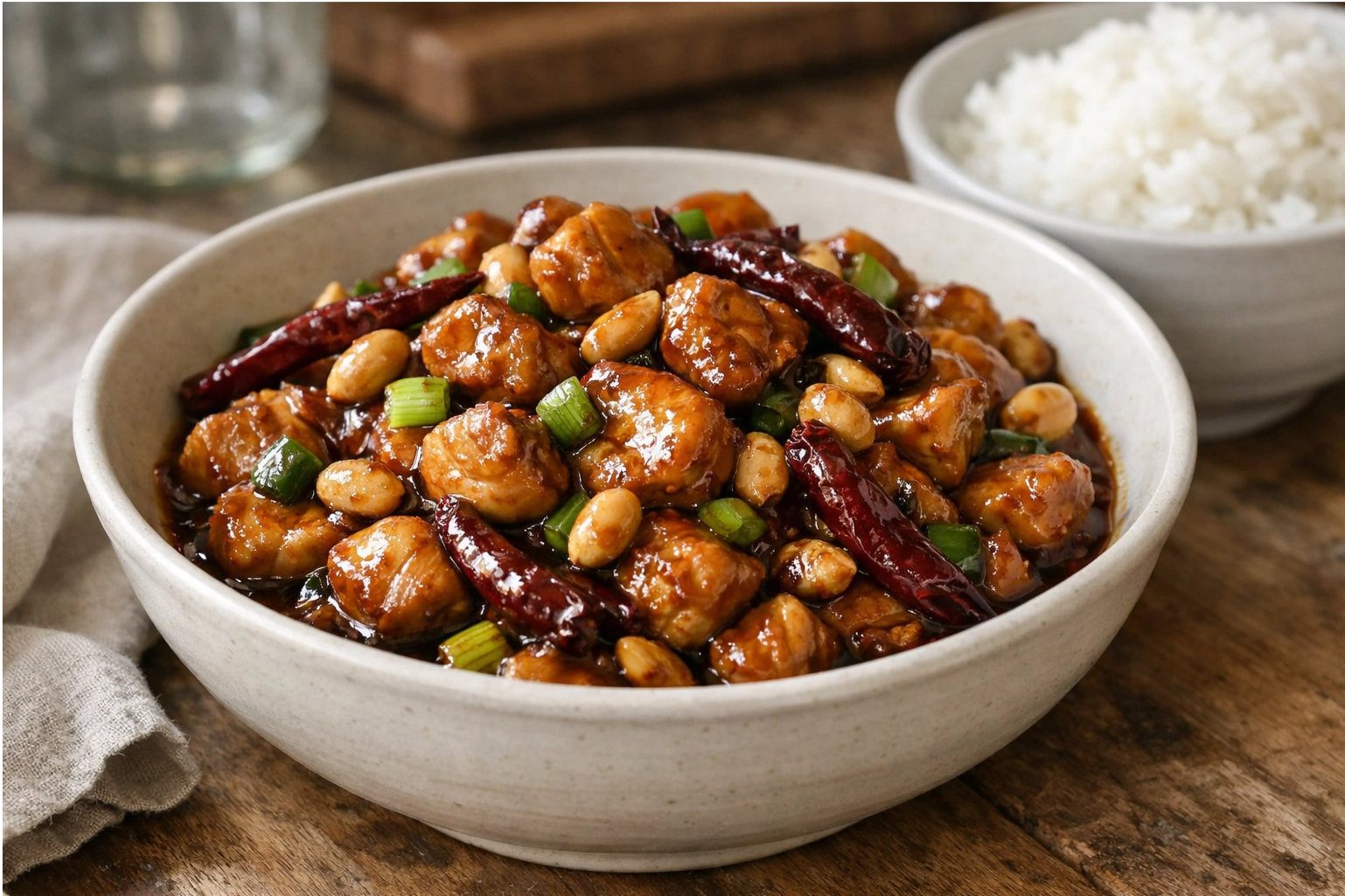
This isn’t an authentic Sichuan recipe that will leave your tongue numb from peppercorns, but it is a fantastic, reliable dinner that scratches the itch for takeout without the delivery fee. It relies on dried red chiles for heat, which are much easier to find at a standard grocery store than Sichuan peppercorns.
The most important thing to know about this recipe is that it moves incredibly fast. Once the heat is on, you won’t have time to measure sauce or chop scallions. I learned this the hard way when I burned a batch of garlic while frantically looking for the rice vinegar. Do yourself a favor and have every little bowl measured and lined up next to the stove before you even turn on the burner.
Contents
Ingredients
The Chicken & Marinade
- 1 1/2 pounds boneless, skinless chicken breasts (cut into 1/2-inch cubes)
- 1 tablespoon soy sauce
- 1 tablespoon Shaoxing cooking wine (dry sherry works in a pinch)
- 1 tablespoon cornstarch
The Stir-Fry Sauce
- 1 tablespoon sugar
- 2 tablespoons rice vinegar
- 2 teaspoons toasted sesame oil
- 1/2 cup water
- 4 tablespoons soy sauce
- 1 tablespoon Shaoxing cooking wine
- 2 teaspoons cornstarch (to thicken)
The Stir-Fry
- 2 tablespoons canola or vegetable oil, divided
- 1/2 cup unsalted roasted peanuts
- 6-10 dried red chile peppers, roughly chopped
- 2 garlic cloves, minced
- 4 green onions, chopped (keep the white and green parts separate)
Instructions
- Marinate the Chicken: In a medium bowl, mix the first batch of soy sauce, wine, and cornstarch. Add the chicken cubes and toss to coat. Let this sit while you prep everything else. This technique, called velveting, keeps the breast meat juicy even over high heat.
- Mix the Sauce: In a small jar or bowl, whisk together the sugar, vinegar, sesame oil, water, and the remaining soy sauce, wine, and cornstarch. Make sure the sugar and cornstarch are fully dissolved.
- Toast the Peanuts: Heat 1 tablespoon of oil in your wok or skillet over high heat. Add the peanuts and fry them for just about 30 seconds. They burn very quickly, so as soon as they smell toasty, get them out of the pan and onto a plate.
- Aromatics: Add the remaining tablespoon of oil to the pan. Throw in the dried chiles, garlic, and the white parts of the green onions. Stir continuously for 30 seconds. The chiles might make you cough a bit—turn on your vent fan!
- Cook the Chicken: Dump the chicken and its marinade into the hot pan. Stir-fry vigorously for about 2 minutes. The chicken doesn’t need to be cooked through yet, just seared on the outside.
- Sauce and Serve: Give your sauce a quick stir (cornstarch settles to the bottom) and pour it over the chicken. Toss in the green onion tops. Cook for another minute or two until the sauce bubbles, thickens, and turns glossy. Stir the peanuts back in at the very end and serve immediately over rice.
Why You’ll Love This Recipe
- Speed: From the moment the chicken hits the pan to the moment you serve, it’s only about 5 minutes of active cooking.
- Texture: The “velveting” marinade creates that slippery, tender texture you get at restaurants, while the peanuts add a necessary crunch.
- Customizable Heat: You control the spice level by adjusting the number of dried peppers (or removing their seeds).
Chef’s Tips for Perfection
- The Peanuts: Use roasted, unsalted peanuts. If you use salted ones, the final dish might be too salty because of the soy sauce.
- Shaoxing Wine: This is a staple in Chinese cooking. If you can’t find it, dry sherry is the closest substitute. Don’t use “cooking wine” from a regular supermarket vinegar aisle if you can avoid it; it’s often loaded with salt and preservatives.
- Don’t Burn the Garlic: Because we add the garlic before the chicken, keep the chicken right next to the stove. If the garlic starts to brown too much before you’re ready, add the chicken immediately to cool down the pan.
Storage and Reheating
Stir-fries are really best eaten fresh. If you do have leftovers, they will keep for 3-4 days in the fridge. When reheating, the sauce will be very thick and gelatinous. Add a splash of water before microwaving or reheating on the stove to loosen it back up.
Nutritional Notes
This dish is moderately low in calories compared to deep-fried takeout options like General Tso’s. It provides about 45g of protein per serving. The sodium content is on the higher side due to the soy sauce, so taste before adding any extra salt.