Last Updated on January 29, 2026 by The Daily Simmer Team
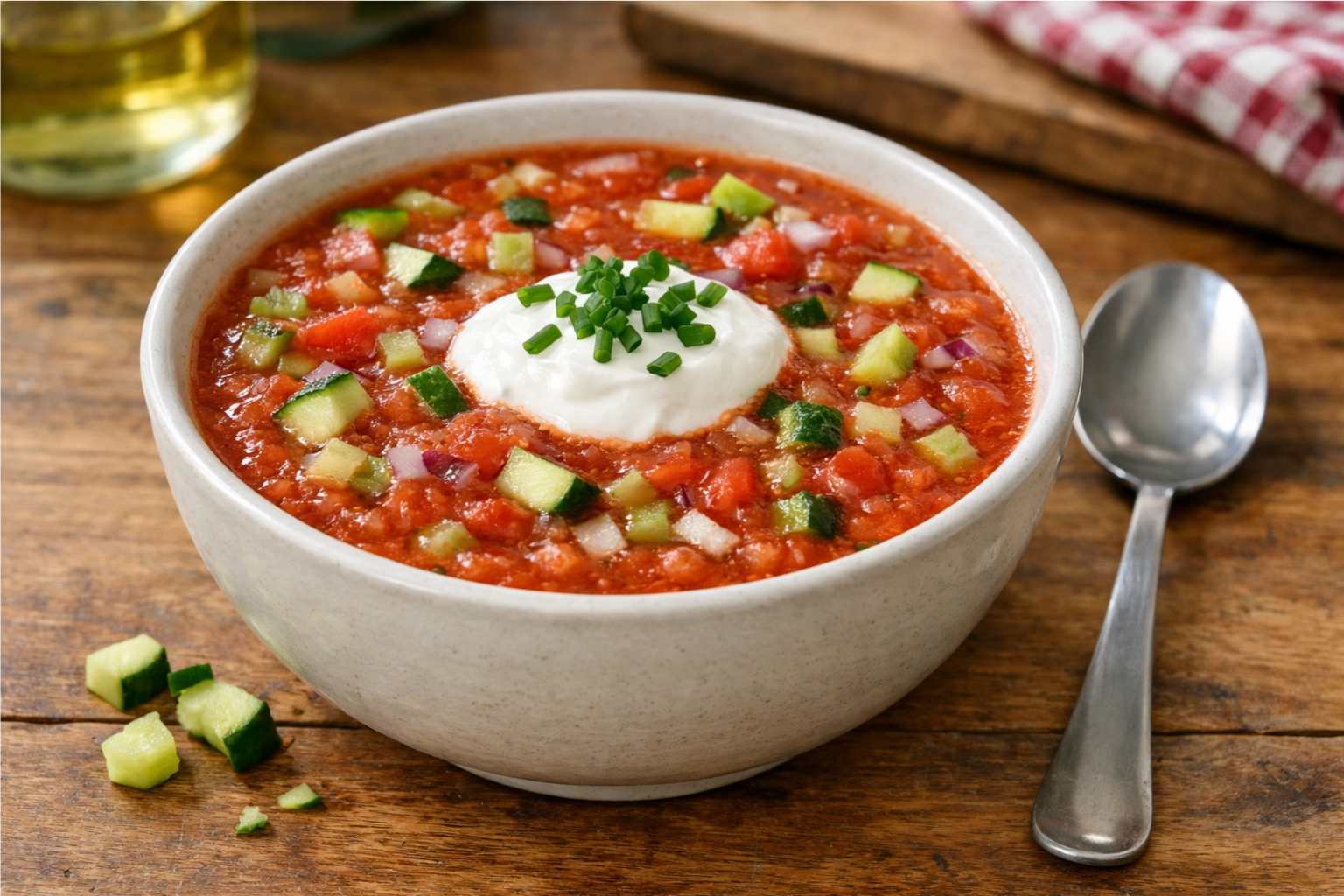
I’ll be honest: I am not a fan of “drinking” my salad unless it’s about 90 degrees outside. But when mid-July hits and the garden is exploding with more cucumbers and tomatoes than I know what to do with, this gazpacho becomes my lunch staple. It’s cold, acidic, and salty—basically Gatorade in soup form.
This version leans a bit more American-style than the traditional bread-thickened Andalusian recipes because it uses a base of bottled vegetable juice (like V8). I prefer this method because it guarantees a consistent flavor and texture even if your fresh tomatoes aren’t perfectly ripe yet. It also includes zucchini, which adds a nice bulk without altering the flavor much. I always make this in the morning so it has time to sit; if you eat it right out of the blender, the flavors feel a bit disjointed.
Contents
Ingredients
- 3 stalks celery, roughly chopped
- 1 English (hothouse) cucumber, unpeeled and chopped (see tips)
- 1 medium zucchini, chopped
- 3/4 red onion, chopped
- 4 cups tomato-vegetable juice (like V8), chilled
- 2 cloves garlic, peeled
- 1/4 cup extra virgin olive oil
- 1/4 cup red wine vinegar
- 2 tablespoons granulated sugar (start with less, see notes)
- 2 tablespoons hot sauce (Cholula or Tabasco)
- 1 tablespoon celery salt
- 1 tablespoon garlic salt
- 6 Campari or cocktail tomatoes
- Garnish: Sour cream, chives, or hard-boiled eggs
Instructions
- Divide the Veggies: This recipe uses a “blend half, pulse half” method to get that perfect chunky texture. Put half of your celery, cucumber, zucchini, and onion into the blender. Set the other half aside, along with the fresh tomatoes.
- Make the Base: Add 2 cups of the tomato juice, garlic, olive oil, vinegar, sugar, hot sauce, celery salt, and garlic salt to the blender. Blitz this on high until it is completely smooth and emulsified.
- Add Texture: Toss in the reserved chopped vegetables (including the Campari tomatoes) and the remaining 2 cups of tomato juice. Pulse the machine 2 or 3 times. Do not over-blend! You want distinct crunchy bits suspended in the smooth base.
- The Chill: Pour the soup into a covered container and put it in the fridge for at least one hour. This step is non-negotiable; the chill helps the garlic mellow out and the vinegar settle.
- Serve: Taste it before serving. Depending on your juice brand, you might need more black pepper or a dash more hot sauce. Serve cold with a dollop of watered-down sour cream or chopped chives.
Why You’ll Love This Recipe
- Texture Control: By blending half and pulsing half, you avoid that “baby food” texture that some pureed soups have.
- Kitchen Temp: This is a true no-cook meal. You don’t even have to boil water to peel tomatoes.
- Fridge Cleanup: It uses up the stray stalks of celery and half-onions that tend to accumulate in the crisper drawer.
Chef’s Tips for Perfection
- Watch the Salt: Between the V8, celery salt, and garlic salt, the sodium adds up fast. I usually don’t add any extra kosher salt until the very end, and often I find it doesn’t need it.
- The Sugar: Two tablespoons of sugar might sound odd for a savory soup, but it cuts the acidity of the vinegar and the canned juice. However, if your fresh tomatoes are super sweet, start with 1 tablespoon and taste as you go.
- Cucumber Choice: Use English (hothouse) or Persian cucumbers. Their skins are thin and they have fewer seeds. If you only have standard garden cucumbers (slicers), peel them and scoop out the seeds or the soup will be bitter.
Storage and Reheating
Gazpacho tastes better on day two. It will keep in the fridge for about 3 days. You can freeze it, but the chunks of fresh vegetables will lose their crunch when thawed. If I plan to freeze it, I blend the whole batch until smooth so the texture change isn’t as noticeable later.
Nutritional Notes
This is a low-calorie, nutrient-dense soup, but it can be high in sodium depending on the vegetable juice you use. You can swap for low-sodium juice if you are watching your salt intake.