Last Updated on January 29, 2026 by The Daily Simmer Team
I resisted gluten-free baking for a long time because most store-bought mixes resulted in bread that tasted like cardboard or crumbled the second you looked at it. This recipe was the one that changed my mind. It uses a specific blend of almond flour and tapioca flour, which mimics the texture of wheat flour surprisingly well without being gritty.
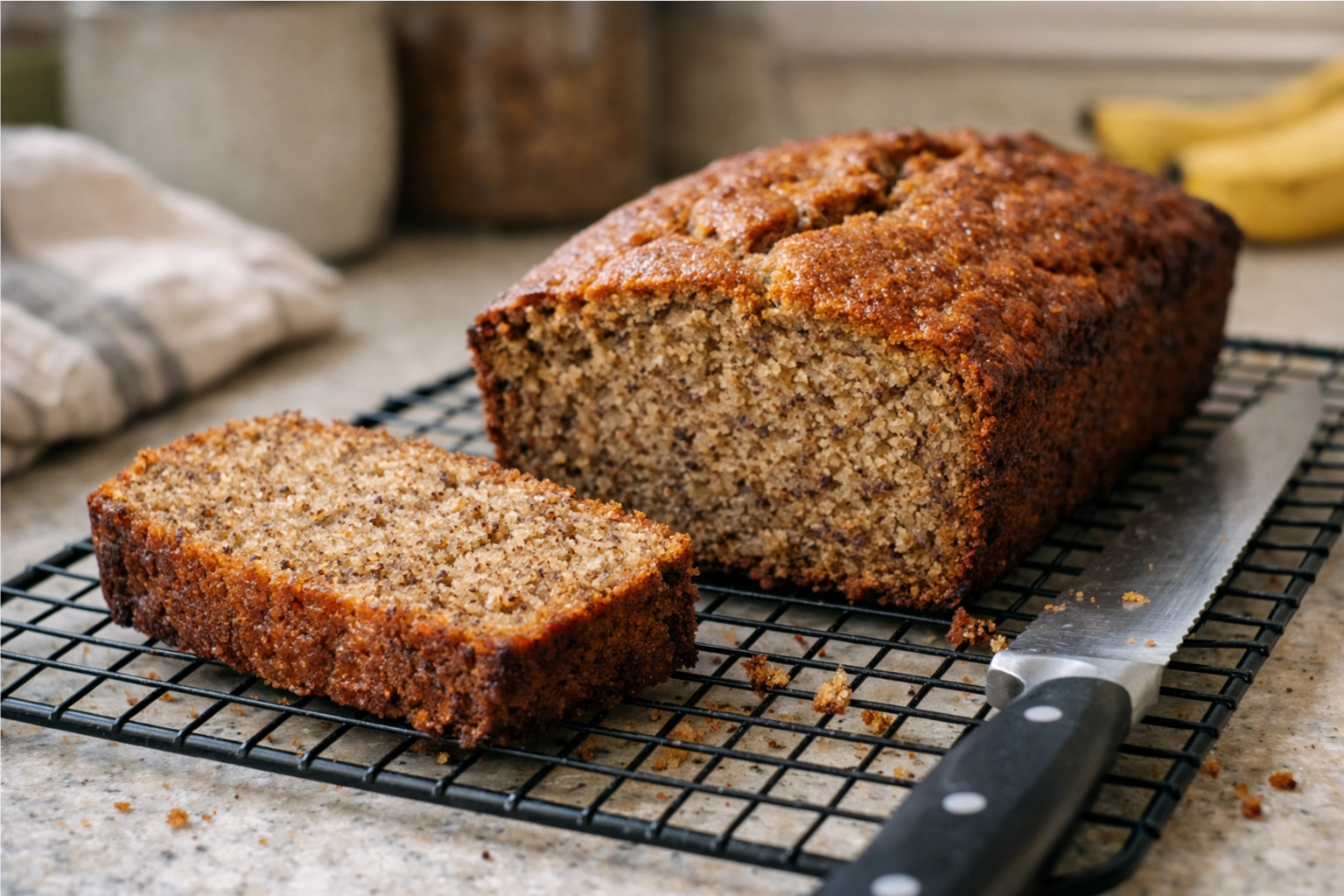
Because there is no gluten to hold the structure, this recipe relies heavily on eggs (four of them!) and the natural starch in the tapioca. I’ve found that if you cut into this loaf while it’s still hot, it can be a bit gummy in the center. It really requires patience to let it cool completely on the counter before slicing. It’s dense, not fluffy like a sponge cake, but it toasts beautifully the next morning with a smear of salted butter.
Contents
Ingredients
- 4 medium overripe bananas (you need about 2 cups once mashed)
- 4 large eggs, room temperature
- 5 tablespoons unsalted butter, melted (allow it to cool slightly so it doesn’t cook the eggs)
- 1 tablespoon vanilla extract
- 1/4 cup organic cane sugar
- 1 3/4 cups finely ground blanched almond flour
- 1/2 cup tapioca flour
- 1 teaspoon baking soda
- 1/2 teaspoon baking powder
- 1 teaspoon ground cinnamon
- 1/4 teaspoon sea salt
Instructions
- Prep: Preheat your oven to 350°F. I usually grease my loaf pan with a wrapper from a stick of butter, but parchment paper works best if you want to lift the whole loaf out later.
- Mix the Wets: In your largest bowl, mash the bananas. You want them pretty liquidy. Whisk in the eggs, the slightly cooled melted butter, vanilla, and sugar.
- Mix the Drys: In a separate bowl, combine the almond flour, tapioca flour, baking soda, baking powder, cinnamon, and salt. Use a fork to break up those little hard lumps that almond flour tends to get.
- Combine: Dump the dry mix into the wet bowl. Stir until just combined. The batter will be a bit thicker than a standard cake batter.
- Bake: Pour it into the pan and smooth the top. Bake for 45 to 50 minutes. Check it at the 40-minute mark; if the top is getting too dark but the middle is still jiggly, tent it loosely with aluminum foil.
- Cool: Let it sit in the pan for 15 minutes, then move to a wire rack. Wait until it is cool to the touch before slicing.
Why You’ll Love This Recipe
- Moisture: The almond flour provides natural oils that keep the bread moist for days, unlike rice flour blends which dry out quickly.
- Simplicity: You don’t need xanthan gum or complicated proprietary flour blends.
- Flexibility: It works just as well as muffins—just reduce the baking time to about 20-25 minutes.
Chef’s Tips for Perfection
- Banana Ripeness: The bananas should be ugly—covered in brown spots or even mostly black. If they are yellow, the bread won’t be sweet enough and the texture will be starchy.
- Dairy-Free Swap: I’ve made this using melted coconut oil instead of butter for friends with dairy issues. It works perfectly, though you can taste a hint of coconut.
- Measuring Flour: Don’t pack the almond flour into the cup. Scoop it gently and level it off. Packed flour makes for a heavy, brick-like loaf.
Storage and Reheating
Because this bread is very moist, it can mold if left in a warm kitchen for too long. I keep it on the counter for 2 days, then move it to the fridge. It freezes exceptionally well; I slice the whole loaf, separate slices with parchment paper, and freeze them in a bag. They can go straight from the freezer to the toaster.
Nutritional Notes
This is nutrient-dense bread. Almond flour adds significant protein and healthy fats, but it also increases the calorie count compared to white flour bread. It’s very filling—one slice usually does the job.
A DailySimmer – Gluten-Free Banana Bread Recipe – Deliciously Organic Recipe
Related posts:
 A DailySimmer – Blueberry Crumb Cake (grain-free, gluten-free) – Deliciously Organic Recipe
 A DailySimmer – The Best Gluten-Free Cornbread (grain-free, Paleo) – Deliciously Organic Recipe
 A DailySimmer – Pumpkin Zucchini Sourdough Muffins – Deliciously Organic Recipe
 A DailySimmer – Long-Fermented Sourdough Orange Rolls – Deliciously Organic Recipe