Last Updated on January 29, 2026 by The Daily Simmer Team
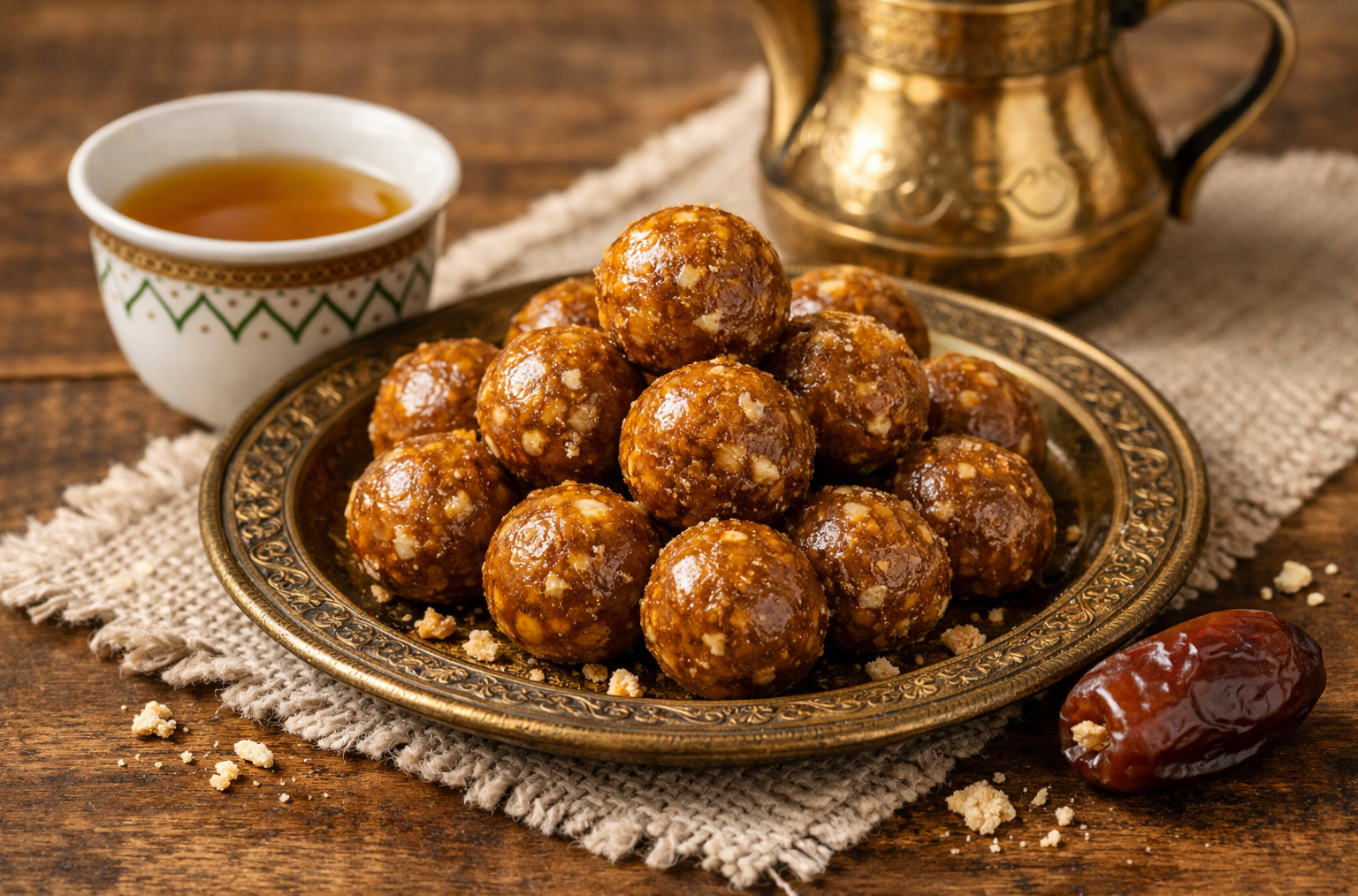
3-Ingredient Date and Ghee Truffles (Sha’tha)
The original sweet-and-savory energy bite that has powered desert travelers for centuries.
In my kitchen, I often find myself experimenting with complex pastries, tempering chocolate, or worrying about the humidity affecting my meringue. But lately, I’ve been drawn back to the absolute basics. There is something profoundly grounding about recipes that don’t require an oven, a stand mixer, or a list of chemical stabilizers. Today, I’m sharing a recipe that is likely older than most of the cookbooks on my shelf: Sha’tha.
If you are unfamiliar with this treat, think of it as the ancient ancestor of the modern “energy ball.” It hails from the Arabian Peninsula, specifically originating from Bedouin culture where food needed to be non-perishable, nutrient-dense, and capable of withstanding extreme heat. It wasn’t just a dessert; it was survival fuel.
The first time I tasted Sha’tha, my brain was a little confused. I expected a standard sugary date ball, like the coconut-rolled ones we see at holidays. Instead, I was hit with a wave of intense nuttiness from the ghee, followed by a sharp, almost cheese-like tang from the dried yogurt. It’s a flavor profile we rarely see in Western desserts—that bold intersection where aggressive savory notes meet intense natural sweetness. It’s distinctive, unapologetic, and honestly, once you get past the initial surprise, it becomes completely addictive.
I make a batch of these when I know I have a busy week ahead. They are dense, heavy, and satisfying. One small truffle with a cup of black coffee is enough to keep me going from breakfast until a late lunch.
Contents
The “Big Three” Ingredients
Since there are only three ingredients in this recipe, there is absolutely nowhere to hide. You cannot mask low-quality dates with sugar, and you cannot hide bad butter with vanilla extract. The quality of each component will dictate the final taste. Here is exactly what you need to look for:
1. The Dates
Not all dates are created equal. For Sha’tha, you need soft, fleshy dates. I highly recommend using Sukkari dates if you can find them at a Middle Eastern market; they are often called “royal dates” because they are incredibly soft and have a caramel-like flavor that melts easily. Medjool dates are a great second choice. Please avoid the dry, papery dates often found in the baking aisle of generic supermarkets—they simply won’t mash into the dough properly, and you’ll end up with a crumbly mess that falls apart in your hand.
2. The Dried Yogurt (Eqt/Jameed)
This is the wildcard for most Western cooks. Eqt (pronounced iq-it) is dried, fermented milk curds. It is usually sold as rock-hard white stones. It is extremely hard, salty, and sour. Think of it as a very dry, very sharp Parmesan cheese but made from yogurt. In this recipe, it plays the role of salt in a “salted caramel” dessert, but with an added fermented complexity that balances the sugar.
Chef’s Note: If you absolutely cannot find Eqt, you can try to mimic the effect by toasting milk powder in a dry skillet until golden and mixing it with coarse sea salt, though you will miss that specific sour tang.
3. The Ghee
Please, I beg you, do not use vegetable oil or regular butter. Regular butter contains water (about 15-20%), which will make the mixture spoil faster and will affect the binding texture. Vegetable oil lacks flavor. Ghee (clarified butter) is pure fat with a rich, nutty aroma that coats the palate. When you knead it with the dates, it creates a velvet-like consistency that makes these truffles melt in your mouth.
How to Make It: Step-by-Step
Step 1: The Crush
The hardest part of this recipe is physical. The dried yogurt stones are tough. I usually wrap them in a clean kitchen towel and take a mallet to them to break them into smaller pieces first. Then, I transfer them to a food processor to pulse into a coarse powder. You don’t want a fine dust; you want a little bit of texture, like coarse sand, to provide a crunch against the soft dates.
Step 2: The Mix
In a large bowl, dump in your pitted dates. Pour the crushed yogurt powder over them. Then, pour the ghee. I like to warm the ghee slightly (just until melted, not hot) because it helps soften the dates upon contact, making the next step easier.
Step 3: The Knead
Wash your hands well, because you are going in. Spoons are useless here. You need to squeeze and knead the mixture. At first, it will seem like they won’t combine—the dates will slide around in the ghee. But keep working it. The heat from your hands and the friction will break down the fibers of the dates. After about 3 to 5 minutes, you will have a uniform, sticky, golden-brown mass.
Step 4: Shaping
Traditionally, Sha’tha is sometimes left as a loose mixture in a bowl for guests to pick at, but I prefer shaping them into balls. It makes them easier to serve and portion control. Pinch off a piece, roll it between your palms—the ghee will ensure they don’t stick to your skin—and set it on a plate.
Why You’ll Love This Recipe
- Contrast of Flavors: The saltiness of the yogurt prevents the dates from feeling cloyingly sweet. It cleans the palate as you eat.
- Pantry Friendly: It uses ingredients that have very long shelf lives, so you can make it whenever you have a sudden craving or unexpected guests.
- No Baking: It comes together entirely without using the oven or stove, which keeps the kitchen cool during summer months.
Serving and Storage
The Perfect Pairing: In Saudi Arabia and the Gulf, this is almost exclusively eaten with Arabic coffee (Gahwa). The coffee is usually brewed with cardamom and saffron and served unsweetened. The bitterness and spice of the coffee are the perfect counterbalance to the rich sweetness of the Sha’tha. If you don’t have Arabic coffee, a strong double espresso or a black Americano works beautifully.
Storage: Because Sha’tha was designed for desert travel, it is incredibly stable.
- Counter: You can keep these in a sealed container on your kitchen counter for up to 3 weeks. In fact, I find the flavor improves after the first day.
- Fridge: If you prefer a firmer, chewier texture, store them in the fridge. They will last for months.
Chef’s Tips & Troubleshooting
- Mixture too dry? Your dates were likely old. Add a tablespoon of hot water or a little extra melted ghee to help bind it.
- Mixture too greasy? This happens if the dates are very small. Simply add more crushed yogurt powder or a few more dates to balance out the fat.
- Yogurt too hard? Ensure you grind the Eqt finer next time. If you have already mixed it, let the truffles sit for 2 days; the moisture from the dates will eventually soften the yogurt bits slightly.